Magnesium and the Hallmarks of Aging
Nutrients
February 9, 2024; Vol. 16; No. 4; Article 496
Ligia J. Dominguez, Nicola Veronese, Mario Barbagallo; from the School of Medicine, “Kore” University of Enna, Italy, and the Department of Medicine, University of Palermo, Italy. This study cites 254 references.
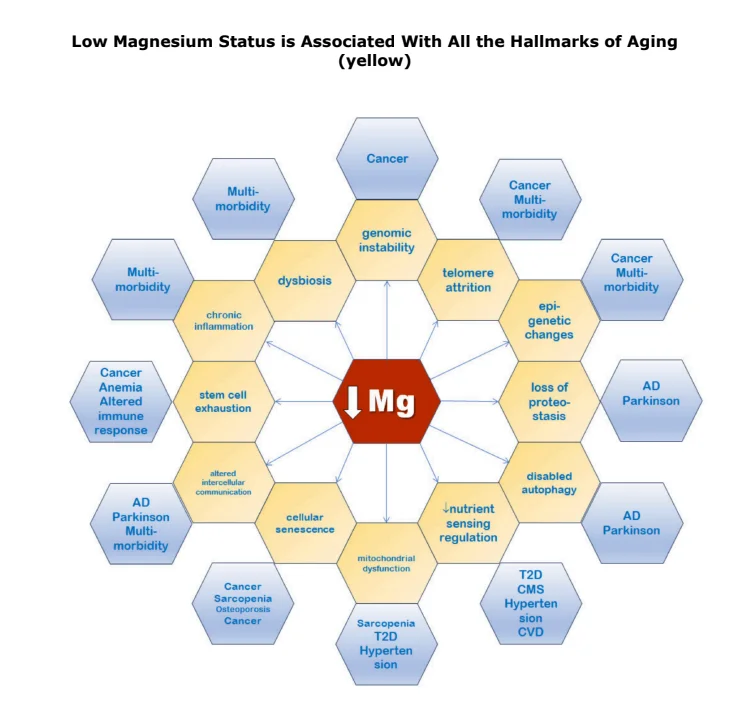
This article reviews the evidence of the “relationship of magnesium with all the hallmarks of aging (genomic instability, telomere attrition, epigenetic alterations, loss of proteostasis, deregulated nutrient sensing, mitochondrial dysfunction, cellular senescence, stem cell exhaustion, altered intercellular communication, disabled autophagy, dysbiosis, and chronic inflammation), which may positively affect the human health span.” [Key Point]
This review is an overview of the links between magnesium and the hallmarks of aging and the effects of magnesium on the aging process and age-related chronic diseases.
Apoptosis:
A process where a cell self-destructs to make way for healthier cells; it is a normal and essential biological mechanism that removes damaged, aged, or unwanted cells, and prevents harmful cells, like cancer, from multiplying.
Autophagy:
Autophagy is a self-preservation mechanism in which your body removes (recycles) damaged or dysfunctional parts of cells in order to regenerate newer, healthier cells.
Senescence:
Senescence is the biological process where a cell permanently stops dividing and functioning properly, but doesn’t die. This cellular aging process can be triggered by DNA damage or telomere shortening. While it serves as a tumor suppressor mechanism by preventing damaged cells from proliferating, an accumulation of senescent cells can release harmful inflammatory substances, contributing to age-related diseases and aesthetic aging.
KEY POINTS FROM THIS ARTICLE:
1) “Magnesium is an essential ion in the human body that regulates numerous physiological and pathological processes.”
2) “Magnesium deficiency is very common in old age.”
3) “Age-related chronic diseases and the aging process itself are frequently associated with low-grade chronic inflammation, called ‘inflammaging’.”
- “Magnesium insufficiency has been linked to excessive generation of inflammatory markers and free radicals, inducing a chronic inflammatory state.”
- “Magnesium inadequacy may be considered among the intermediaries helping [to] explain the link between inflammaging and aging-associated diseases.”
4) “Maintaining an optimal balance of magnesium during one’s life course may turn out to be a safe and economical strategy contributing to the promotion of healthy aging.” [Important]
5) “Magnesium is a fundamental mineral, indispensable for numerous cellular processes including all oxidative phosphorylation processes, over 600 enzymatic reactions, energy generation, nucleic acids synthesis and stability, protein synthesis, and carbohydrate metabolism.”
6) “An adequate magnesium status is essential for organs and systems in the human body.”
- Magnesium deficiency is common and “has been associated with various age-related chronic diseases.
7) The 12 hallmarks of aging are:
- genomic instability
- telomere attrition
- epigenetic alterations
- mitochondrial dysfunction
- loss of proteostasis
- deregulated nutrient sensing
- cellular senescence
- stem cell exhaustion
- altered intercellular communication
- autophagy
- microbiome disturbance
- inflammation
8) Magnesium “is the most abundant cellular divalent cation in living cells, the second most abundant intracellular cation in the human body after potassium, and the fourth most common mineral in the whole body after calcium, sodium, and potassium.”
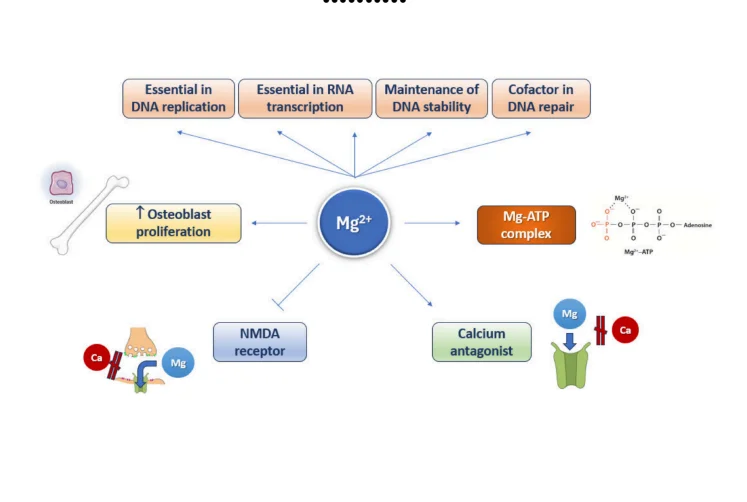
9) Magnesium is an indispensable cofactor for the structural and catalytic actions of numerous enzymatic reactions, including all oxidative phosphorylation reactions, energy production, protein synthesis, nucleic acid synthesis and stability, and glycolysis.
10) Magnesium modulates muscle contraction including cardiac rhythm and neuron excitability.
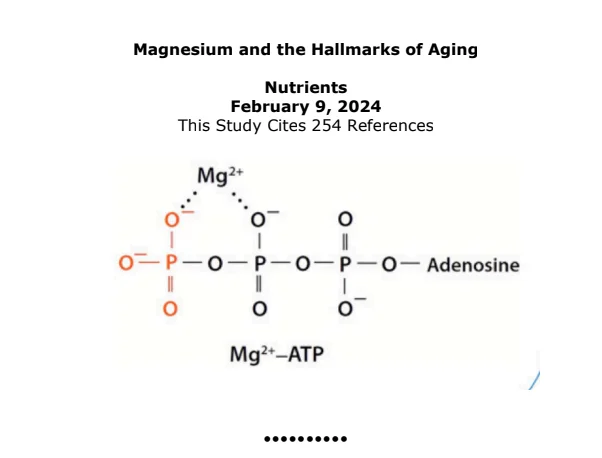
11) Magnesium is involved in adenosine triphosphate (ATP) mitochondrial synthesis to form Mg-ATP. [Important]
12) 98% of magnesium is intracellular; only 2% of magnesium is in the serum.
13) “Accruing evidence points to a life-long healthy lifestyle as the key to successful aging.” [Key Point]
14) Chronic magnesium deficiency is frequent among older adults and attributed to low dietary magnesium (usual in Western diets), increased urinary excretion, or reduced intestinal absorption.
15) Diseases that are associated with hypomagnesemia include:
- Diabetes
- Hypertension
- Malnutrition (inadequate intake)
- Alcohol abuse
- Chronic diarrhea
- Hyperaldosteronism
- Hyperthyroidism
- Hypoparathyroidism
16) The main iatrogenic causes of hypomagnesemia include:
Medications
- Chronic use of diuretics
- Chronic use of proton pump inhibitors
- Use of nephrotoxin drugs
Surgery
- Bariatric surgery
- Parathyroidectomy
17) The symptoms and signs of hypomagnesemia include:
Neuromuscular and central nervous system
- Muscle cramps
- Muscle weakness, fasciculations, tremors
- Lethargy, tetany
- Vertigo, nystagmus
- Depression, psychosis
- Carpopedal spasm
- Convulsions
- Athetosis, chorea-like movements
Cardiovascular
- Atrial tachycardia, fibrillation
- Supraventricular arrhythmias
- Ventricular arrhythmias
- Torsade de pointes
- Digoxin sensitivity
Complications of magnesium deficiency
- Alterations in glucose homeostasis
- Hypertension
- Atherosclerotic vascular disease
- Myocardial infarction
- Osteoporosis
Other disorders
- Asthma
- Migraine
- Chronic fatigue syndrome
- Impaired athletic performance
18) “Low magnesium status is associated with all the hallmarks of aging.” [Key]
19) Genomic Instability
- “Genomic instability refers to an increased predisposition to genomic modifications (e.g., DNA damage, mutations, and chromosomal abnormalities), and it is engendered by the effects of epigenetic alterations, oxidative stress, and deficient DNA repair and telomere maintenance.”
- “DNA repair mechanisms become less effective during aging.”
- “Cancer is one of the results of unrepaired DNA damage.”
- “DNA mutations occur throughout life; the longer the lifespan, the more likely they are to occur.”
- “Maintaining intracellular magnesium at a physiological level is an important determinant of DNA stability.” [Key Point]
20) Telomere Attrition
- “Telomeres are sections of repetitive nucleotide sequences (TTAGGG in humans) containing non-essential information, located at both ends of each chromosome, and protecting against its degradation and fusion with other chromosomes.”
- “A small fraction of telomeric DNA (50–100 pairs of bases in human fibroblasts) is lost in each cell division.”
- “When telomeres attain a critically short length, cells turn off their replication machinery, becoming senescent, which occurs after about 50 divisions in most human cells.”
- “Telomeres may undergo shortening due to oxidative stress, and shorter telomeres have been associated with increased risk of cancer, cardiovascular disease, and mortality.”
- Smoking is a cardinal risk factor for cardiovascular disease, cancer, mortality, and accelerates telomere attrition.
- “Physical activity protects against telomere attrition.” [Important]
21) Epigenetic Alterations
- “Epigenetics refers to modifications of genome expression without altering the DNA sequence that modulate cellular and tissue functions.”
- Epigenetics switches on and off the expression of certain genes as the situation demands.
- The epigenome can be modified by diet and other lifestyle factors.
- Epigenetic expression is linked to DNA methylation.
- Magnesium influences epigenetics. [Very Important]
- A low magnesium diet alters DNA methylation.
- Magnesium supplementation epigenetically alters the expression of inflammatory genes.
22) Mitochondrial Dysfunction
- “Mitochondria are the cellular ‘powerhouse’ producing most of the available ATP, which is the main energy source for cellular processes.”
- Mitochondrial signaling drives the cell destiny to either survival or death by apoptosis.
- “[Mitochondria] are the main sources of free radicals (reactive oxygen species, ROS) as a consequence of normal cellular metabolism and aerobic respiration, which, when they exceed the cellular antioxidant capacity, have been linked to aging and various age-associated diseases, including Alzheimer’s and Parkinson’s disease, among others.” [Important]
- “The accumulation of dysfunctional mitochondria is characteristic of aging, with decreased ATP production and increased ROS generation.” [Key Point]
- “Excessive ROS damages all molecules, from proteins to DNA, causing them to mutate and, thereby, dysregulating their function.”
- “Dysfunctional mitochondria produce less ATP, reducing the energy supply and leading, over time, to chronic inflammation, oxidative stress, and cellular damage.” [Key Point]
- The most prominent cellular function of mitochondria is “its binding to ATP in the Mg–ATP complex.” [Very Important]
- Over a third of cellular magnesium is located in the mitochondria.
- Various Krebs Cycle enzymes and the electron transport chain depend on magnesium, including a direct activation of mitochondrial Complex V.
- “Disrupting magnesium mitochondrial homeostasis reduces ATP production, alters mitochondrial membrane potential, and intensifies oxidative stress.”
- “Magnesium supplementation improves mitochondrial function by suppressing the overproduction of ROS.”
- “The close link between magnesium and muscle is probably due to the mitochondrial synthesis of Mg-ATP.”
- “This link has also been defined for vascular smooth muscle.”
23) Loss of Proteostasis
- “Several age-related chronic diseases have been linked to the dysregulation of proteostasis, including neurodegenerative and cardiovascular diseases.”
- “Low brain levels of magnesium have been reported in neurological disorders, e.g., epilepsy, migraine, and Alzheimer’s and Parkinson’s disease.”
- Magnesium decreases the blood–brain barrier’s permeability. [Important]
- Magnesium inhibits the N-methyl-D-aspartate (NMDA) receptors. [Important]
24) Deregulated Nutrient Sensing
- “Systems sensing and interpreting cellular vital resources accessibility, i.e., energy and nutrients, or ‘nutrient-sensing systems’ are crucial for the regulation of physiological responses and processes that support growth, reproduction, and aging.”
- The development of age-related chronic diseases has been ascribed to altered nutrient-sensing pathways, such as insulin sensitivity and type 2 diabetes (T2D).
- “A higher magnesium intake is associated with increased insulin sensitivity and with 30% decreased risk of incident T2D.”
- “[Magnesium] supplementation has been proposed as a non-pharmacologic, safe, and inexpensive adjuvant for the metabolic control and prevention of T2D.” [Important]
- “Low dietary magnesium has been associated with an elevated risk of metabolic syndrome, glucose intolerance, and T2D.”
- “Magnesium impacts metabolic pathways through its function as a cofactor of fundamental enzymatic systems in the mitochondria, where the Mg–ATP complex regulates glycolytic enzymes.”
- “Magnesium modulates the effects on glucose metabolism and protein and DNA synthesis.” [Very Important]
- “Magnesium supplementation enhances mitochondrial function, prevents tissue oxidative stress, and enhances lifespan.” [Key Points]
25) Stem Cell Exhaustion
- “Stem cells maintain human tissues due to their self-renewing capacity and ability to differentiate into progenitor cells.”
- The immune-senescence is linked to immunocompetence.
- Older people have a mild degree of immunosuppression due to immune-senescence, associated with “multimorbidity, organ decline, malnutrition, functional failure, frailty, geriatric syndromes, and polypharmacotherapy.”
- “The combination of all these factors may help to explain the increased susceptibility to infections with a worse prognosis, including COVID-19, to the development of neoplasms and autoimmunity, and to a reduced ability to heal cutaneous lesions in old age.”
- “Investigations support the role of magnesium in the immune response.”
- “Magnesium is a cofactor for the synthesis of immunoglobulins.”
- Magnesium has a crucial role in cellular replication as well as in DNA and RNA synthesis.
- Magnesium deficiency is detrimental to bone health.
- “Magnesium deprivation may generate stressful conditions that modulate stem cell plasticity and differentiation potential.”
26) Altered Intercellular Communication
- “Inflammaging may have several causes, including increased production of free radicals, increased secretion of pro-inflammatory cytokines and adipokines, enhanced activation of the NF-κB pathway, and modifications in the gut microbiome and intestinal permeability.”
- “Magnesium blocks the ion channel of the NMDA receptor and prevents its excessive activation.” [Very Important]
- “A reduction in extracellular magnesium depolarizes the membrane potential, leading to hyperexcitability.”
27) Compromised Autophagy
- The prominent activation of autophagy increases lifespan.
- “Magnesium is essential for chief cellular processes, comprising energy metabolism, proliferation, and apoptosis.”
- “A lack of magnesium increases the tendency to oxidative damage, enabling alterations in membrane integrity and function.”
28) Dysbiosis
- “The uniqueness in microbiome composition was strongly and positively associated with known metabolic markers of the microbiome implicated in inflammation, immune regulation, aging, and longevity.”
- “Modifications in microbial populations and the cross-talk along the gut–brain axis regulates inflammatory nociception, inflammatory responses, and immune homeostasis, which together with the age-associated loss of structural integrity of the gut and other barriers (e.g., blood–brain barrier) can provide key advances in age-related inflammation-associated diseases.”
- “A high-magnesium diet significantly reduced the expression of IL-6, IL-1β, and TNFα in parallel with decreased joint damage and arthritis severity.”
- “A high-magnesium diet had higher numbers of IL-10-producing T cells.”
- “Hypomagnesemia is a commonly reported side effect of proton pump inhibitors (PPIs), a first-line treatment for gastric acid-related disorders.”
- The increase in the luminal pH reduces magnesium intestinal absorption.
- “Dietary magnesium supplementation increased the population of bacteria linked to intestinal health and metabolic homeostasis and reduced bacteria associated with inflammation and related human diseases, such as inflammatory bowel disease.”
- “Gut microbiota, as well as magnesium, have been linked to mental conditions, including depression and anxiety disorders.”
- “Magnesium has a significantly positive impact on intestinal microbiota and mental manifestations.”
29) Inflammation
- “A significant feature of aging is a prevalent chronic, low-grade, systemic inflammation—inflammaging—which is linked to and predictive of frailty, T2D, neurodegenerative diseases, and mortality risk.”
- “Age-related chronic low-grade inflammation, or inflammaging, is involved in a wide range of chronic diseases.”
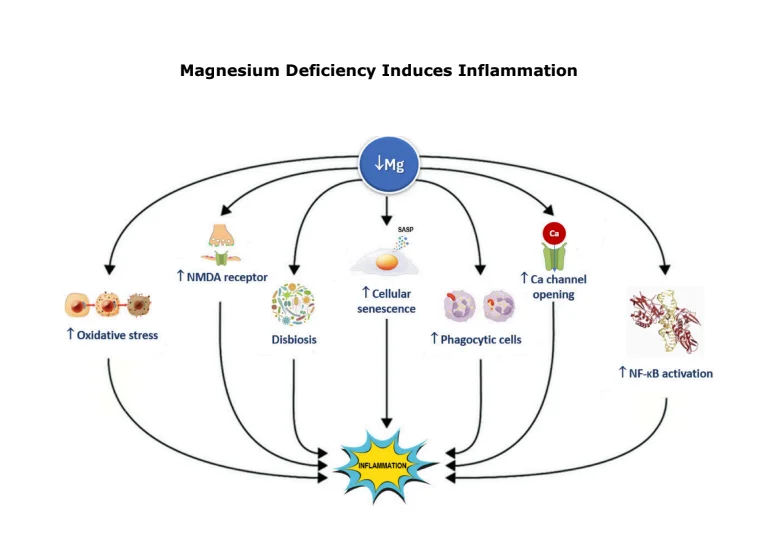
- “Low concentrations of magnesium initiate an excessive production and release of IL-1β and TNF-α, activate phagocytic cells, open calcium channels, activate the NMDA receptor and NF-κB signaling, and stimulate the synthesis of nitric oxide and other inflammatory markers.”
- “Increased ROS production and altered calcium homeostasis triggered by low magnesium levels have been shown to further impair mitochondrial function, increasing the release of inflammatory markers.” [Important]
- “Magnesium deficit enhances platelet adhesiveness and aggregation and inhibits endothelial cells’ migration and growth, potentially disrupting microvascular structure and function.”
- “Adequate magnesium concentrations inhibit ROS production and mast cell degranulation, protect epithelial cells, and lessen the oxidative and inflammatory damage to cells and blood vessels.”
- “Magnesium has calcium channel-blocking effects that lead to the downstream suppression of IL-6, NF-κB, and CRP.” [Very Important]
- “Low dietary magnesium is associated with low-grade systemic inflammation.”
- “There is an inverse association of a low dietary magnesium intake with serum CRP levels.”
- “Magnesium supplementation significantly reduced different human inflammatory markers, specifically nitric oxide and CRP concentrations.”
30) Conclusions:
- “Magnesium is an essential cation in the human body because it regulates numerous physiological and pathological processes.”
- “Magnesium deficiency is very common in older adults.”
- “Chronic low-grade inflammation (inflammaging) is recurrently associated with a number of chronic diseases linked to aging and with the aging process itself.”
- “Because magnesium inadequacy has been associated with an excessive production of inflammatory markers and ROS, we have formerly hypothesized that a chronic magnesium insufficiency may be one of the intermediaries of the relation between inflammaging and age-related diseases.” [Key Point]
- “There is evidence that magnesium is related to all the hallmarks of aging.”
- “An optimal magnesium balance during one’s life course may help preventing inflammaging and its related consequences.”
31) Serum magnesium concentration will only reveal severe magnesium depletion because the amount in the serum is much lower than the intracellular magnesium content. [Important]
- Serum values that tend to be low should be considered inadequate.
32) “Assessment of renal function before supplementation is important, while magnesium supplementation in patients with renal failure should be undertaken cautiously.”
33) “The possibility that maintaining a suitable magnesium balance over the course of a lifetime may become an inexpensive and safe strategy contributing to healthy aging.”
We have reviewed these studies pertaining to magnesium:
Article Review 37-16:
Magnesium in Disease Prevention and Overall Health
Article Review 29-17:
Calcium Supplementation and Risk of Dementia in Women
Article Review 51-22:
The Relevance of Magnesium Homeostasis in COVID-19
Article Review 1-23:
Magnesium-to-Calcium Ratio and Mortality from COVID-19
Article Review 33-23:
Dietary Magnesium Intake is Related to Larger Brain Volumes and Lower White Matter Lesions
My favorite books on magnesium are:
The Magnesium Factor by Mildred Seelig, MD, PhD, 2003
The Magnesium Miracle by Carolyn Dean, MD, 2014
Cure Your Fatigue by Morley Robbins, MBA, 2021
These references insist that serum magnesium levels are a poor indicator as to one’s magnesium levels; they insist that the only acceptable test is RBC magnesium levels, and the acceptable range is 6.0-6.5 mg/dL.