- 39 New London Turnpike Suite 120 Glastonbury, CT 06033

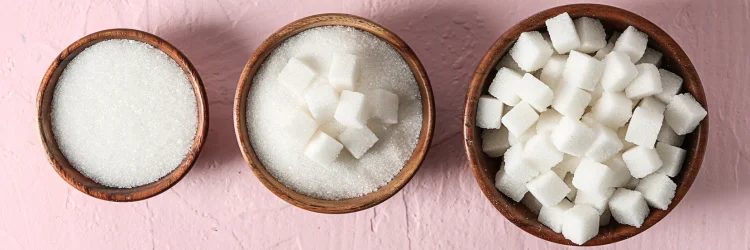
Fructose and Glucose from Sugary Drinks Enhance Colorectal Cancer Metastasis via SORD
Nature Metabolism
October 2025; Vol. 7; No. 10; pp. 2018-2032
Tianshi Feng, Qin Luo, Yanlin Liu, and 16 more; authors are from:
This study cites 52 references.
These authors investigated whether sugar-sweetened beverage consumption promotes progression and metastasis of advanced colorectal cancer and explored the underlying mechanisms.
The sugar experiments used 3 formulas:
BACKGROUND FROM DAN MURPHY:
Sucrose (white table sugar) is a disaccharide: 50% glucose + 50% fructose.
High Fructose Corn Syrup is roughly 55% fructose and 45% glucose.
Sorbitol dehydrogenase (SORD) is a key enzyme that catalyzes the NAD (nicotinamide adenine dinucleotide) to fructose.
KEY POINTS FROM THIS ARTICLE:
1) “Diet is widely recognized as one of the most significant environmental factors contributing to the development of CRC [colorectal cancer].”
2) “The consumption of sugar-sweetened beverages (SSBs), which contain high levels of fructose and glucose, has been causally and mechanistically linked to an increased risk of colorectal cancer (CRC).” [Key Point]
3) “[These authors] show that exposure of CRC cells to a glucose and fructose formulation—reflecting the composition of both high-fructose corn syrup and sucrose found in SSBs—enhances cellular motility and metastatic potential compared to glucose alone.” [Important]
4) “Since the 1980s, SSB consumption has risen globally.”
5) “In the USA, over half of adults and nearly two-thirds of youth consume SSBs daily.” [Very Important]
6) Prior research showed that SSBs can directly promote CRC tumorigenesis independent of obesity.
7) A large epidemiological study has confirmed that SSB intake doubled the risk of young-onset CRC. [Important]
8) “Many patients with CRC are diagnosed at advanced stages, and some continue to consume SSBs even after diagnosis.” [Crazy]
9) Mechanisms:
10) Sorbitol:

11) Findings:
12) Conclusions:
13) “Despite advances in CRC treatment, metastasis remains the primary cause of CRC-related mortality.” [Important]
14) Future:
COMMENTS FROM DAN MURPHY:
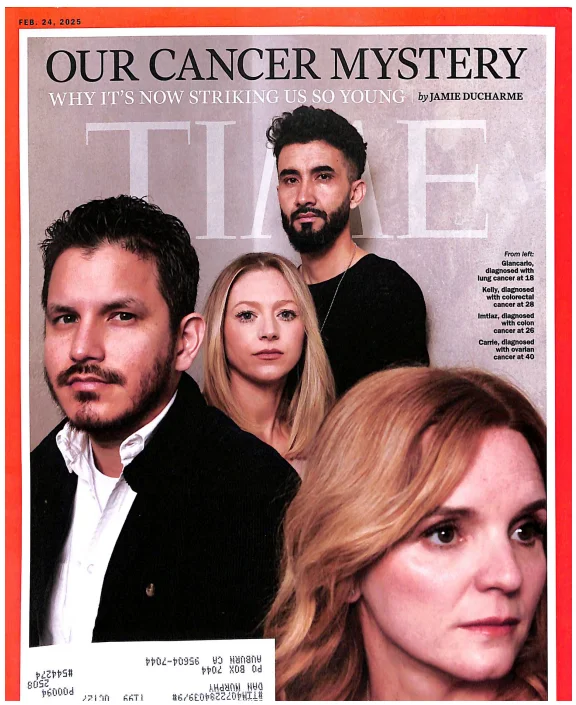
The cover article (February 24, 2025) from the political magazine TIME, highlighted CRC is young Americans. The article title is More Young Adults are Getting Cancer; Researchers are Racing to Understand Why. The statistics are disturbing. This present study attributes much of the increased incidence of CRC to the consumption of SSB; the TIME article also suggests increased risk attributed to ultraprocessed foods, micro and nanoplastics, and antibiotics that decimate the normal flora of the microbiome; see Article Reviews:
20-24: Rapid Single-particle Chemical Imaging of Nanoplastics
36-25: Bioaccumulation of Microplastics in Decedent Human Brains
38-24: Implications of Ultraprocessed Food Addiction
13-25: Ultraprocessed Food Intake and Psoriasis
11-26: The Addicted Brain: How Processed Foods Hijack Reward Pathways
A Troubling Increase for Colon and Breast Cancer in Younger Adults:
Aishwarya Thakur, MD, is a resident physician in pediatrics at Columbia University and a member of the ABC News Medical Unit.
January 17, 2024; ABC News
More people are being diagnosed with cancer than ever before, and at an earlier age, according to a major new report from the American Cancer Society.
Especially concerning is the rising number of deaths of young people from colon cancer – same illness that killed Marvel actor Chadwick Boseman at the age of 43.
“Colon cancer is now the number one cause of death among men younger than 50, and the number two cause of death in women of the same age group.”
“Colon and breast cancer now exceed lung cancer as leading causes of cancer death for those under the age of 50.”
“It’s something that wasn’t represented in statistics yet – that there has been a creep toward younger age of onset of certain common cancers. Colorectal and breast are the dominant ones,” said Dr. Larry Norton, oncologist and researcher at Memorial Sloan Kettering, and doctors and researchers have been noticing this in their practice and research.
“For colon cancer, oncologists say that the trends in the U.S. are matched by other high-income countries and say it’s possible the increase could be due to new lifestyles or environmental exposures for younger generations.”
“Environmental factors, such as exposure to chemicals in foods and in the air, and other currently unidentified factors, such as the recent legalization of cannabis and increased cannabis use, can’t be ruled out as risk factors.”
“There are studies that even show that risk factors like whether or not you were breastfed, whether or not you had antibiotics at a high rate as a child — that these factors might be predicting your chances of getting cancer when you’re an adult.”
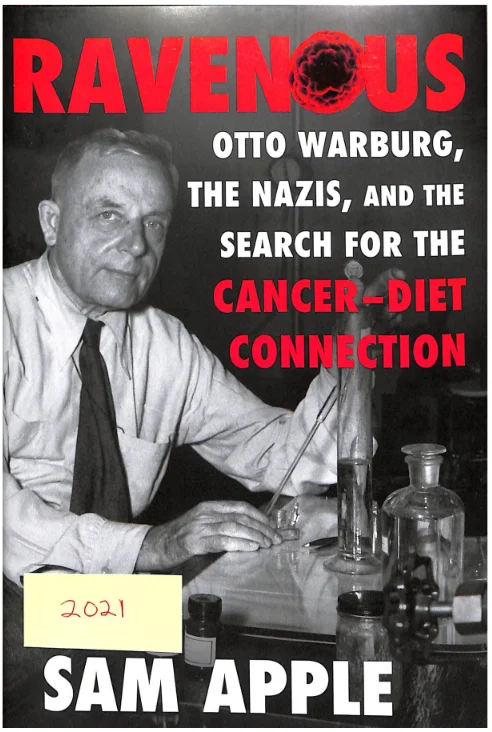
SSB drive (feed) cytosol glycolysis which feed cancer cells, allowing them to grow bigger, stronger, divide, and metastasize. For those that are interested, read the book Ravenous by Sam Apple, which is a book about the cancer researcher Otto Warburg who discovered the cytosolic fermentation (glycolysis) of sugar to feed cancer cells:

39 New London Turnpike Suite 120
Glastonbury, CT 06033